
Finding Agawam Resident Records
Picture an Agawam residents directory as a chain of official records. It is not one master list. Start with the connection you need. A current parcel question belongs with the assessor and GIS. A recorded transfer belongs with the Hampden Registry of Deeds. A historical household may surface in a library directory, yearbook, newspaper, or town report. The Town Clerk keeps municipal records. These run from elections and local certificates to business certificates, licenses, and annual census material. Every source carries its own date and meaning. An owner field is not an occupancy statement.
Names need care too. Preserve spelling variants, initials, former names, and a rough date range. Addresses deserve the same discipline. Keep the number, street suffix, ZIP code, locality, and parcel ID in separate fields. Agawam, Feeding Hills, North Agawam, and Agawam Center can appear as different labels. They may all sit within one historical trail. A result grows strongest when a second source with a different purpose supports it. That habit guards against same-name mix-ups. It also makes a residents directory search easy to reproduce later.
- Validate an address in the USPS ZIP lookup, then record its postal label without assuming it defines the city line.
- Open the Agawam Assessor route and the GIS viewer to capture the parcel ID, situs address, and owner-of-record context.
- Use the Hampden Registry of Deeds to check the associated recorded transfer, book/page, parties, and legal description.
- For an older household, consult the library and State Library directory, newspaper, town-report, or yearbook collections for the date in question.
- When an existing municipal record is offline, send a focused request to the right custodian with the subject, record type, date range, and desired delivery format.
Agawam Residents Directory Offices
Agawam sits inside Hampden County. Springfield holds the county seat. That split explains why municipal, land, court, and statewide records answer to different keepers. The Town Clerk serves as the local counter for town-held records. The assessor and the Tighe Bond GIS viewer supply the address and parcel layer. The Registry of Deeds handles recorded instruments. State election tools describe polling geography. A municipal voter-file request is the proper route for lawfully available dated list fields. The address-focused sequence continues on the Agawam street directory page.
Hampden Registry of Deeds
Springfield and Westfield offices
Hampden County, MA
(413) 755-1722
Agawam Clerk and Elections
36 Main Street
Agawam, MA 01001
(413) 786-0400 ext. 8215
Agawam Parcel Records First
The Assessor page ties together the town's property-card, GIS, and deed routes. Its VGSI landing page identifies an online assessment database. Search fields there may shift, so test them live. A property card can list building size and type, construction quality, rooms, baths, fireplaces, heating, land area, location, and permit-related facts. The FY2026 values reflect 2024 sales and a January 1, 2025 assessment date. Assessed value is a tax figure. It is not a sale price or title opinion.
The parcel ID makes the best join key. Keep the situs address apart from the owner mailing address. Compare both against the legal description on the recorded instrument. The Agawam GIS viewer offers search suggestions, identify, parcel details, abutter tools, printable reports, and measurement controls. Those map relationships locate land. They do not name every person at an address.
Open the Agawam Assessor landing page first before diving into the property tools.
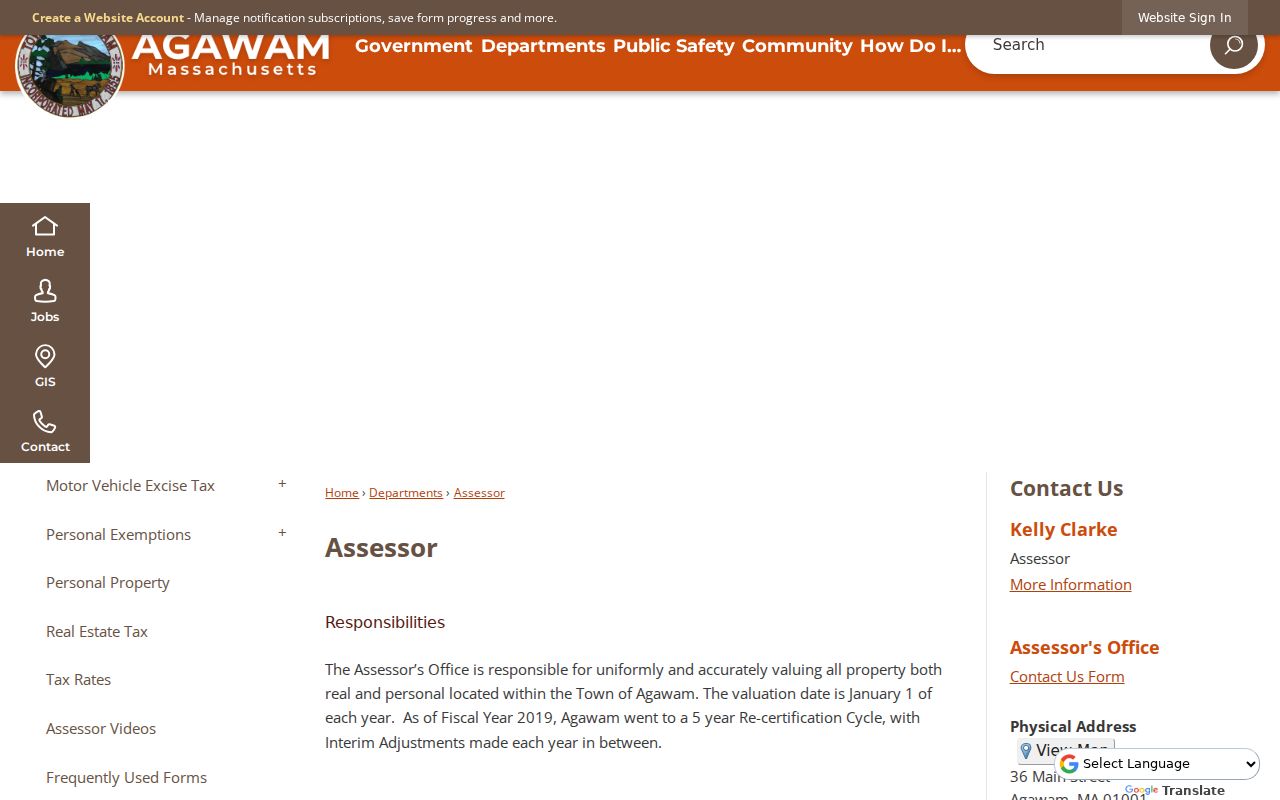
The page points a researcher toward the local property-card, GIS, and deed paths. Each path answers a different question. One address becomes a documented record trail.
Note: Dynamic assessment-card controls should be checked live before relying on a field label or a current value.
Agawam Assessment Directory Fields
Assessment records shine when a resident-search question is really a property question. Record the fiscal year beside every item. Never collapse a parcel owner, a mailing address, and an occupant into one label. Sale and permit references on a card deserve cross-checks against the Registry or the responsible department. An empty field can reflect the database. It is not a finding about the property.
| Assessment item | Why it belongs in the record trail |
|---|---|
| Parcel ID | Joins GIS, assessment, and deed research; retain leading zeros and punctuation. |
| Situs and mailing address | Separates the parcel location from a tax correspondence destination. |
| Owner field | Shows the assessment record's owner of record, not a complete occupancy list. |
| Land and building values | Provides the assessment context for a stated fiscal year. |
| Sale or permit references | Supplies leads that need confirmation in the deed image or department file. |
The VGSI assessment database is the official online entry point captured for this project.
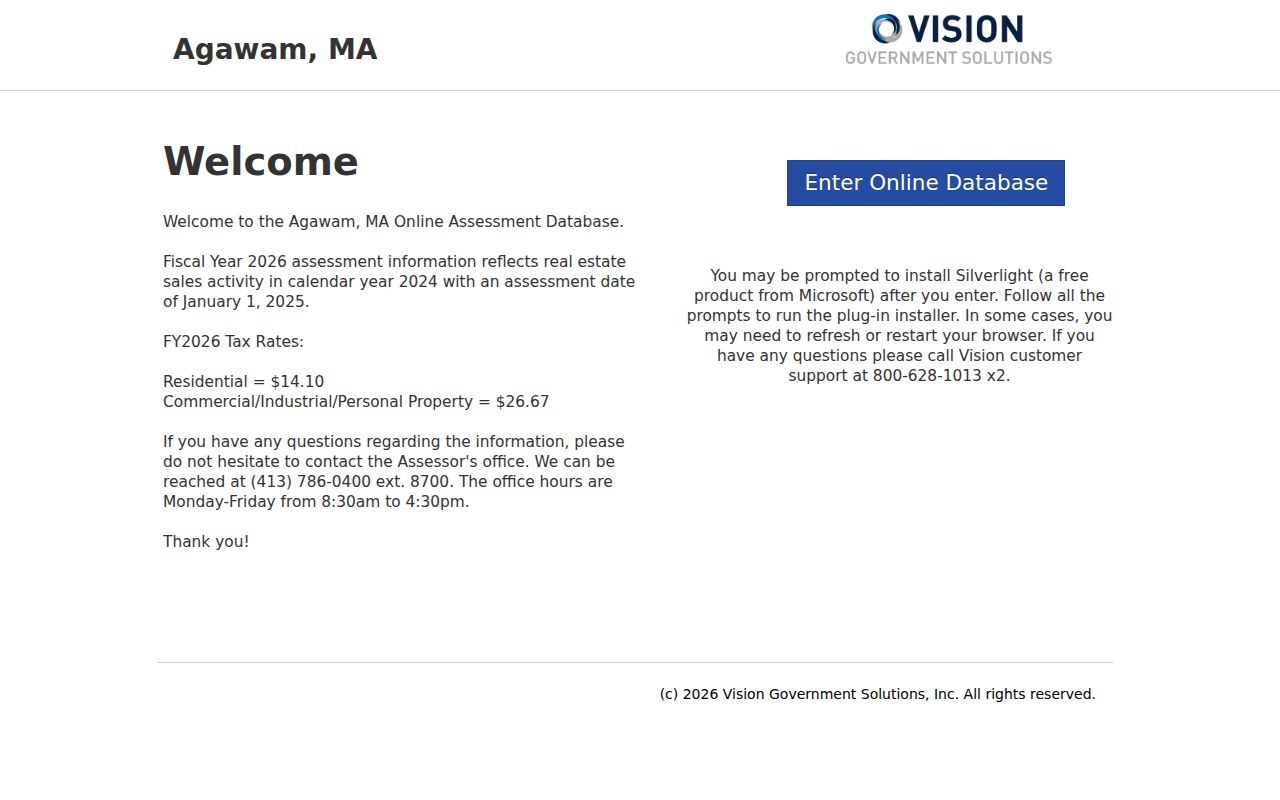
The Assessor's official page confirms the online assessment route.
Current Agawam Resident Directories
Each current directory-like source proves a narrower relationship. Assessment records tie an owner-of-record field to a parcel. The Registry links named parties to a recorded instrument. A municipal voter file can hold limited public, dated registration fields when lawfully obtained, while the statewide polling lookup returns only polling-place and election information. The Clerk also keeps local certificates, business certificates, licenses, and municipal census material. A business address or a court party is not automatically a residential address.
| Agawam source | Relationship shown | Custodian | Access route |
|---|---|---|---|
| Assessment and GIS | Owner field, parcel, situs, map context | Agawam Assessor | Web tools, office, or defined request |
| Deed index | Grantors, grantees, instrument dates | Hampden Registry | Free index/images, paid certified copy |
| Municipal voter file | Dated permitted registration fields | Agawam Clerk | Local request subject to state guidance |
| Court docket | Party role, case type, docket events | Relevant court clerk | MassCourts or counter, with restrictions |
| Local history collections | Historical name or address association | Agawam Library | Reference, digitized, or archive path |
Match the source to the precise question. A one-person confirmation needs a name variant. It also needs an independent second record. The Agawam resident lookup page keeps that workflow separate from address and household history. The polling-place tool supplies no municipality-wide voter list, and protected voter information stays non-public.
Agawam Voter Record Boundaries
Massachusetts keeps its polling-place lookup separate from voter-record requests. The Where Do I Vote form wants a street number, street name, suffix, and either the town or ZIP code. Language tabs and a search button sit alongside it. What comes back is your polling place and election details. It will not show who lives on the street. Agawam has eight precincts. That count is a handy geographic clue. Districts and polling sites shift over time, so date whatever you record.
State guidance spells out which voter fields are public at the municipal level. Name, address, party, date of birth, active or inactive status, and voter ID may appear. Phone numbers, email addresses, veteran status, permanent-absentee status, confidential-voter data, and anything on minors stay protected. When you ask the Clerk, specify a date range. List the fields you want, a delivery format, and your lawful purpose. A polling tool is no substitute for an Agawam residents directory. It is no substitute for a street directory built from real records either.
The Agawam Clerk responsibilities page covers the local counter for elections. It also covers certificates, licenses, and municipal records.
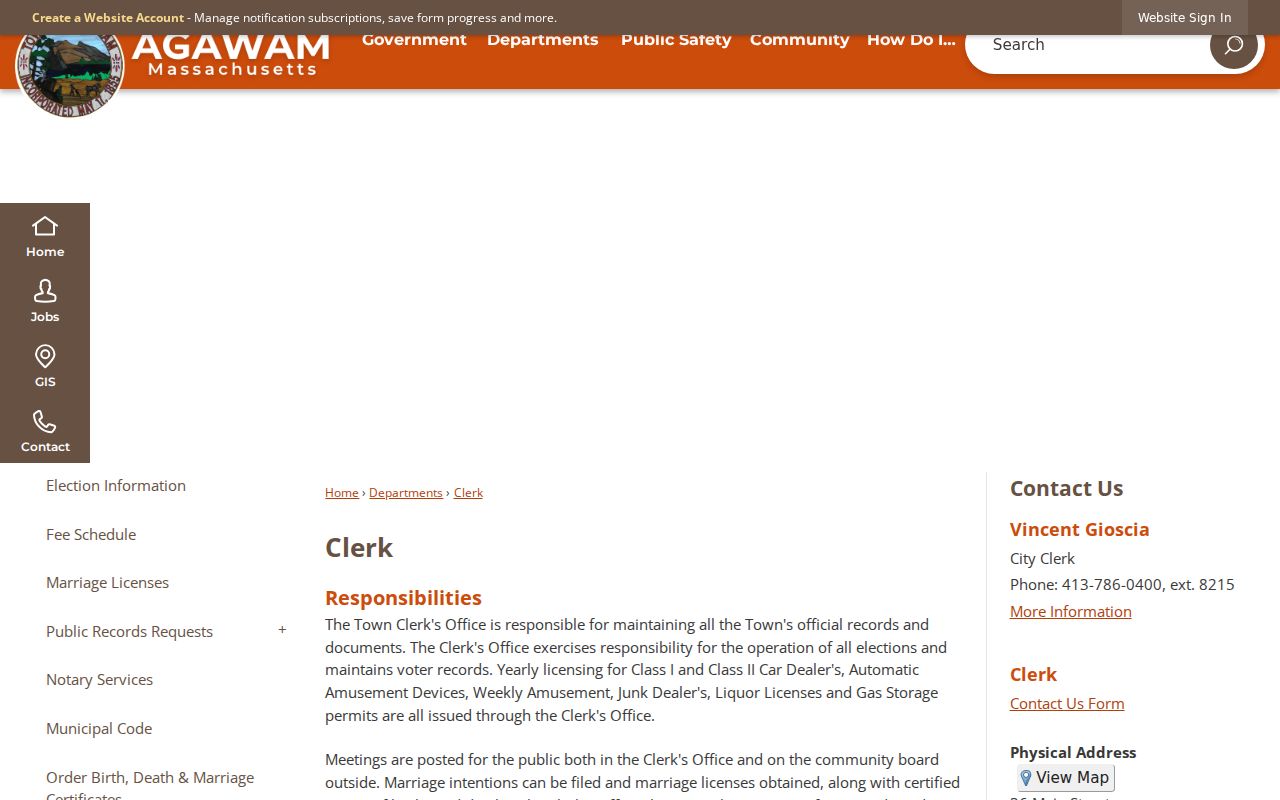
The municipal page shows why a records counter beats a thin online search. A resident lookup sometimes needs the source office behind it.
Agawam Deed Index Trails
Recorded deeds, mortgages, releases, liens, easements, and plans all live at the Hampden Registry. For anything after 1948, the index is complete. You can search by name, address, book and page, year and instrument number, or entry date. Earlier years take patience. Work through the scanned grantor and grantee indexes first. Then pull the book and page image. The Registry's history runs back to 1636. A record that old may need county-custody context before you can tie it to a particular parcel.
Keep the vocabulary straight. A grantor transfers an interest. A grantee receives it. Always read the image itself rather than trusting an index label. Note the instrument type, execution and entry dates, book and page or instrument number, legal description, plan reference, and any prior-deed citation. Online images are free. Certified copies cost extra. An image supports research; it is not a title opinion.
Start at the Hampden Registry of Deeds before running a name or address search.
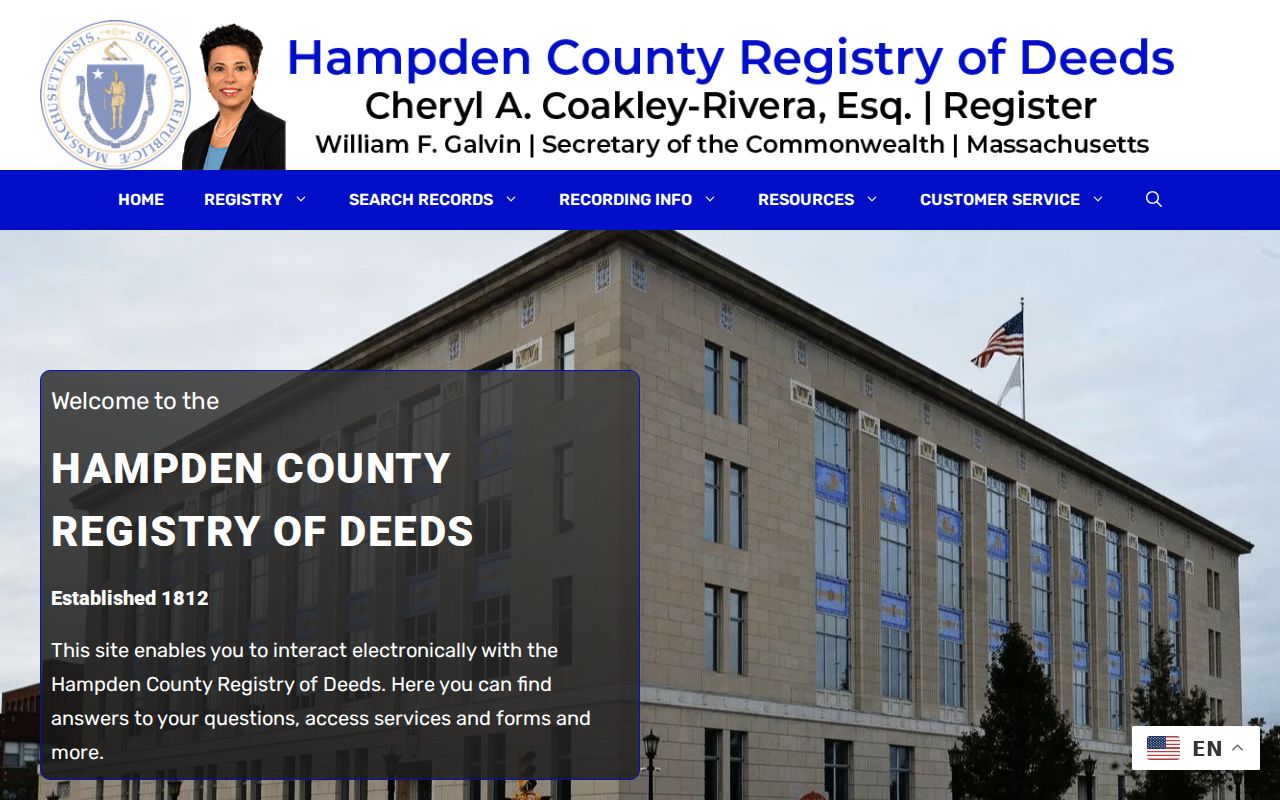
The Registry's official page carries the current digitization and copy guidance. Check it before trusting any mailed deed solicitation.
Agawam Name and Court Records
MassCourts eServices answers narrowly defined court questions for the whole state. The public search opens after a short verification step. It then asks for court department, division, and location, with tabs for name, case type, case number, or ticket. The official guide requires a last name of at least two characters. It also requires a first name of at least one. A docket can pin down a court, a party role, a case type, or a status. It can also pin down dates. It cannot pin down where someone lives. It also cannot prove an allegation true.
For Agawam, Westfield District Court is the district route. Hampden Superior and Probate and Family matters usually land in Springfield. Remote access depends on court department and record type. Criminal remote searching generally needs a case number. Sealed, impounded, juvenile, expunged, adoption, abuse-prevention, and harassment material may simply be unavailable. A record may be indexed but not viewable remotely. In that case, the clerk or register is the right next stop.
The MassCourts public-search landing page shows the official starting interface.
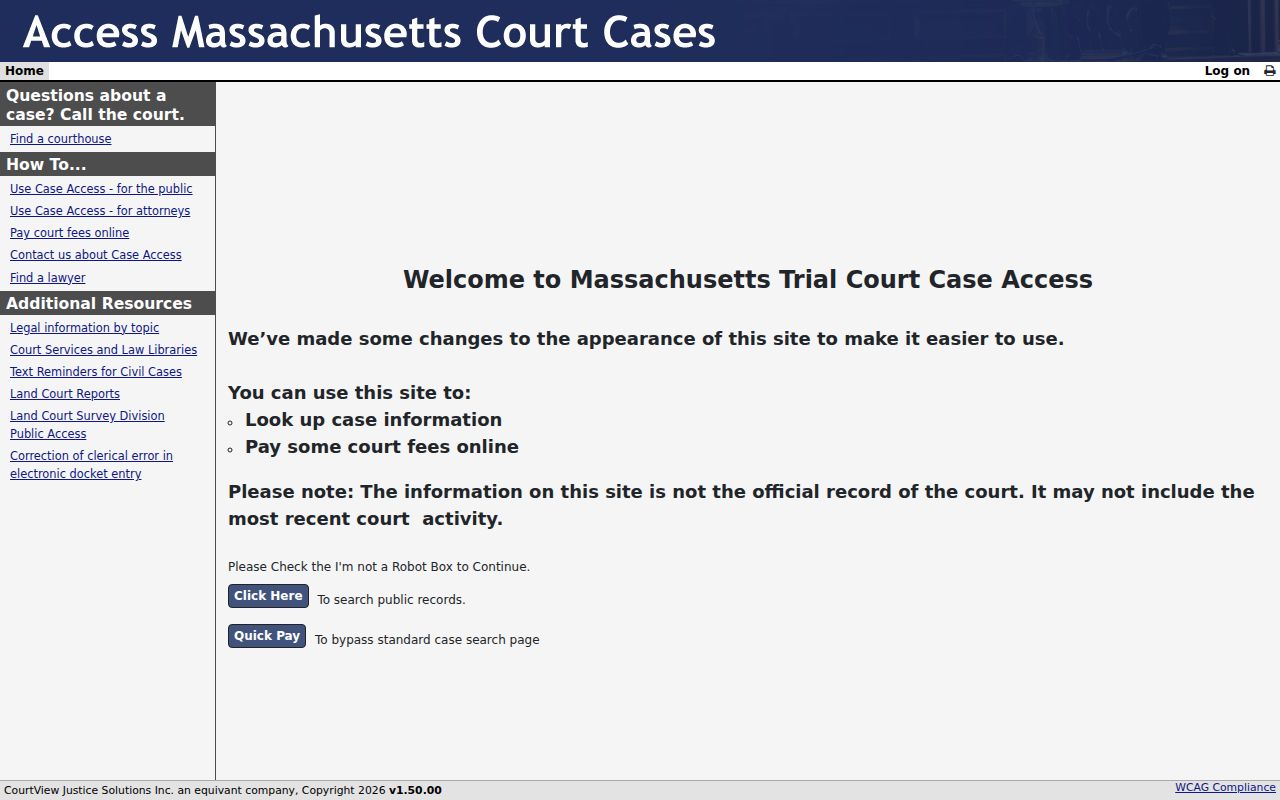
The public search screen makes one thing plain. Court research starts with a defined question, not a broad claim about a resident.
Note: Save the court, division, docket number, result date, and access channel with any lawful court research.
Agawam Public Records Channels
When no public index covers what you need, Agawam still has routes to existing municipal records. The town's Public Records Requests page links to an online portal and a PDF form. You can also request in person, by first-class mail, fax, email, or phone. The Town Clerk sits at City Hall, 36 Main Street, with ordinary weekday hours of 8:30 a.m. to 4:30 p.m. Record-specific hours can differ.
The legal frame is Massachusetts Public Records Law, G.L. c.66 and G.L. c.4 §7(26), implemented through 950 CMR 32. No purpose statement is required. Still, a focused description helps retrieval. Name the custodian, subject, record type, date range, and desired delivery. The framework allows 10 business days for a response, plus possible redaction, a fee estimate, or an extension, with an appeal path to the Supervisor of Records. A custodian need not create a record or answer a historical question.
Open the official request channels page to pick the current municipal route.
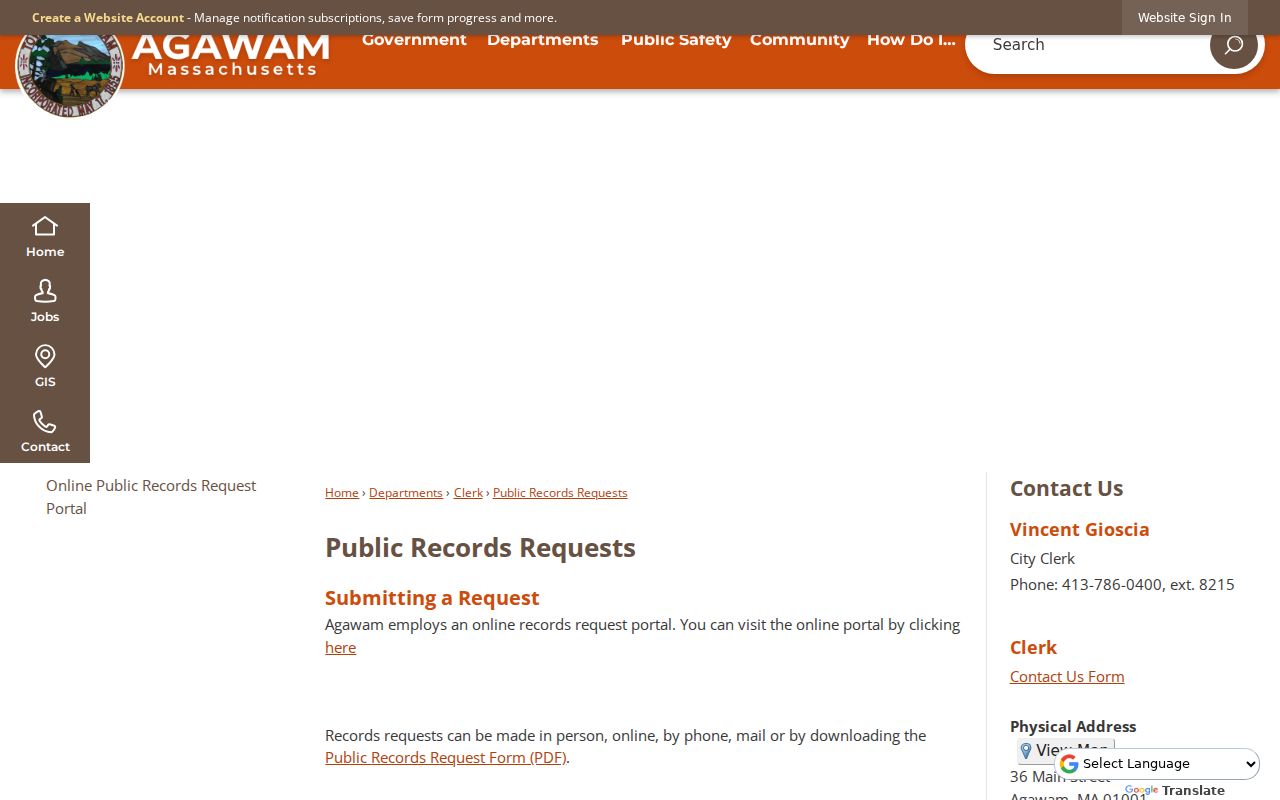
The page ties the portal, the form, and the non-web channels together for records held by city departments. That coverage makes it the practical hub for any Agawam records request.
Historical Agawam Resident Directories
Agawam's historical directory shelf is patchy rather than continuous. Treat it as a set of snapshots instead of a timeline. The State Library catalogs selected Agawam directories covering 1897 to 1968. Feeding Hills editions survive for 1926, 1933, 1935, 1938, 1941, 1966, and 1968. The Springfield Suburban or Manning title folds Agawam-area localities into runs from 1904 through 1958, though with gaps. Beyond directories, Agawam Library points to town reports from 1891 through 1984, digitized newspapers, yearbooks, graduate lists, maps, and photographs.
Each printed directory ties a name to an address for one edition year. That is its limit. An entry cannot prove who lives somewhere today. A missing edition proves nothing about absence. The Agawam city directory page lays out the full collection list, locality variants, and a tracing method. For house history, weigh the directory year against a deed, parcel record, map, newspaper item, or later census release rather than trusting a single printed line.
Agawam Library History Sources
The Agawam Library local-history collection anchors most historical people-and-place work in town. It is the main public shelf. Materials there are generally reference resources. Database links branch out to Archive.org, newspaper collections, genealogy services, yearbooks, and town reports. Digitization is uneven. So note the title and years you actually checked instead of reading a no-hit as a conclusion about a person or property.
- Roll
- A dated list maintained for a particular administrative purpose, such as assessment or voting.
- Index
- A finding tool that points to a record or image; it is not always the complete document.
- Parcel
- A mapped unit of land identified by the assessor and GIS, often more stable than a street label.
- Criss-cross directory
- An address-oriented directory arrangement used to research historical household associations when an edition provides it.
For a recorded-transfer check alongside library work, the Hampden Registry search portal is the tool.
Registry search modes give you the recorded-transfer side of any directory or library finding.
Agawam Records and Local Labels
Agawam records sit on several overlapping maps. A parcel is assessment geography. A ZIP code is a postal label. A precinct is election geography. An older directory may say Feeding Hills, North Agawam, or Agawam Center. A modern source may prefer another postal label. Good notes copy each label exactly as printed. They keep the parcel ID and municipal situs apart, and record the map or source date. That discipline stops a failed lookup from turning into a false negative.
The place also carries deep record history. Hampden County split from Hampshire County in 1812. The Registry holds records reaching back to 1636. The Library and the town reports connect older paper collections with modern online portals. Permitting shifted toward OpenGov in December 2024. So a structure question may need the portal for newer files and a department request for older ones. Agawam mixes city-government phrasing with "Town of Agawam" wording. A careful note preserves whichever form the source uses.
Agawam Clerk Records in Numbers
The Clerk's counter handles far more than a resident lookup suggests. Agawam Clerk totals for 2024 included 270 public-records requests, 207 births, 490 deaths, 105 marriages, 122 business certificates, and 47 alcohol licenses. These are aggregate municipal counts. They cannot name private people. They do show why the right question matters: a certificate, a local license, a voter record, a census item, and a records request can all start at one counter. Each follows entirely different statutes and access rules.
Before contacting the office, write down the kind of municipal relationship you are chasing. A defined request may yield an existing record, an archive route, or a fee estimate. Or a lawful redaction. It will not produce a current residents list. Nor can it override vital-record rules, voter confidentiality, court limits, or address-protection restrictions.